

Professional frustration is a common problem that many people face throughout their careers. To overcome it, it is essential to understand how motivation influences our work life and how to apply it effectively.
In this post, we will explore different theories and approaches related to motivation, and offer practical suggestions to help you improve your job satisfaction and success.
1. Maslow's Pyramid
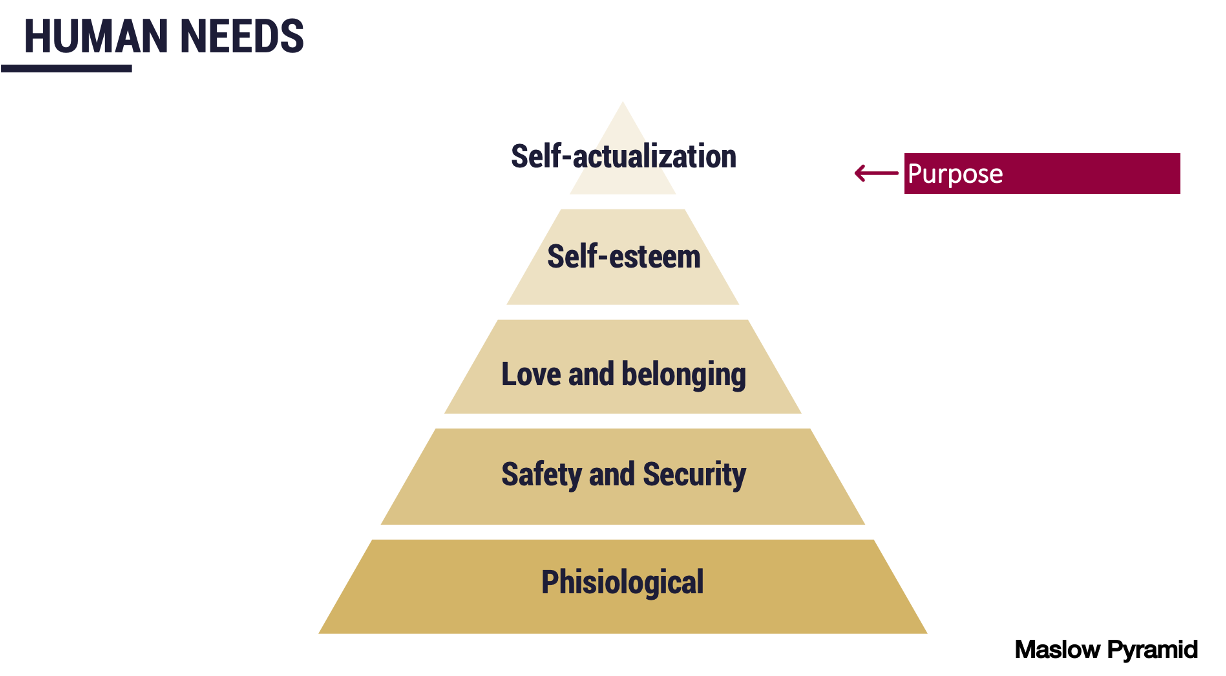
This theory, developed by psychologist Abraham Maslow in the 1940s, suggests that human needs are organized in a hierarchy, in which basic needs (such as food and shelter) must be satisfied before we can focus on higher needs, such as self-actualization.
The pyramid is divided into five levels, starting with physiological needs at the base, followed by safety needs, social needs, self-esteem needs, and finally self-actualization at the top. According to a 2019 study by the London School of Economics, when companies focus on meeting the basic and safety needs of their employees (the first two levels of Maslow's Pyramid), a significant improvement in job satisfaction is observed, increasing by 30% compared to companies that do not address these needs.
Practical suggestion: Assess whether your basic needs are being met and, if necessary, take steps to improve your situation. This will allow you to focus on your career development and the pursuit of greater job satisfaction. Also, identify where you are currently on the pyramid and set goals to advance to higher levels.
2. Know your own strengths
Identifying and leveraging your strengths will allow you to focus on tasks that you find more rewarding and where you can have a greater impact.
Several studies have shown that people who use their strengths at work experience greater satisfaction and better performance. A 2020 report from the Gallup Institute indicates that people who know and use their strengths at work are 15% less likely to quit their jobs, 8% more productive and 15% more engaged compared to those who do not.
Practical suggestion: Conduct a self-assessment of your skills and abilities, and look for job opportunities that allow you to utilize and develop your strengths. You can use tools such as the StrengthsFinder test or the VIA test to help you identify your personal strengths. Also, communicate your strengths to your coworkers and superiors so they can assign you to tasks that match your skills.
3. Values and Purpose (Ikigai)
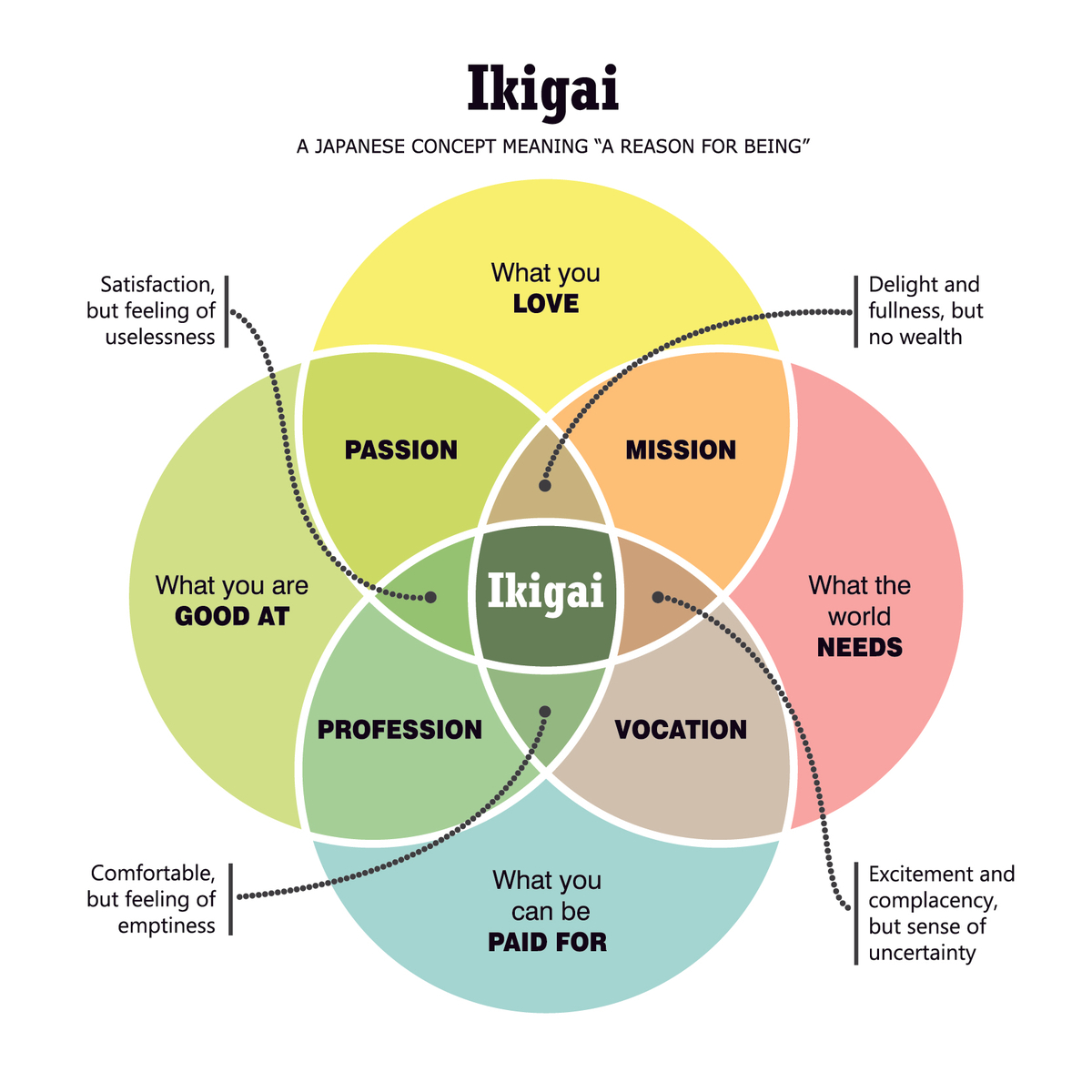
The Japanese concept of "Ikigai" refers to the raison d'être, the intersection between what you love, what the world needs, what you are good at doing and what you can get in return. By aligning your work with your values and purpose, you will increase your job satisfaction and motivation. Studies have shown that people who work in alignment with their values and purpose have greater engagement and satisfaction in their jobs.
*Practical suggestion: Reflect on your values and purpose in life, and consider how your current job aligns with them. If there is a disconnect, look for ways to realign your job responsibilities or explore new opportunities that are more in line with your personal goals. Also, you can set short- and long-term goals that will help you achieve your purpose and live in accordance with your values.
4. McClelland's Theory of Motivations
Psychologist David McClelland proposed this theory in the 1960s, suggesting that there are three main types of motivation: achievement, power and affiliation. By understanding which of these motivations is most important to you, you will be able to focus on achieving objectives and reaching specific goals.
- Achievement Motivation: People motivated by achievement seek to achieve goals and constantly surpass themselves. They are competitive and like to face challenges.
- Power Motivation: Those with a power motivation desire to influence and control others, and seek positions of leadership and authority.
- Affiliation Motivation: Affiliation-motivated individuals value interpersonal relationships and seek to establish connections and collaborate with others.
Practical suggestion: Reflect on your personal motivations and how they relate to your current job. If you find that your primary motivation is not aligned with your job, consider looking for new job opportunities or discussing with your boss how you can adjust your current responsibilities to better meet your needs.

5. Atkinson's achievement motivation theory.
John Atkinson's theory suggests that people are motivated by the desire to achieve a balance between success and failure. By setting realistic and challenging goals in our work, we can increase our motivation and job satisfaction. According to Atkinson, achievement motivation is influenced by both the desire for success and the fear of failure.
Practical suggestion: Set clear and achievable goals for your work, taking into account your skill level and available resources. Make sure your goals are challenging but realistic, which will allow you to maintain a high level of motivation without being overwhelmed by the fear of failure. Also, celebrate your accomplishments and learn from failures to continue to grow and improve in your career.
Now that we've explored different approaches to work motivation, we invite you to share your own experiences and tips in the comments section. What strategies have helped you stay motivated at work? How have you overcome professional frustration? We'd love to hear your stories and learn from your experiences!






No comments yet, add your voice below!